Seven Swords Piercing the Sorrowful Heart of Mary in the Church of the Holy Cross, Salamanca, Spain
On September 15th, the Roman Catholic Church commemorates the Solemnity of Our Lady of Sorrows. The feast grew in popularity during the 12th Century, but was not formally introduced until it was a regional feast in Cologne in 1423. In 1482, the feast was put on the Church calendar as "Our Lady of Compassion". In 1723, Pope Benedict XIII extended the feast to the entire Latin Church under the title: "Septem dolorum B.M.V.". The Code of Rubrics issued by Pope St. John XXIII reduced Our Lady of Sorrows to a Commemoration.
The Friar Servants of Mary (a.k.a. The Servites) have been praying the Rosary of the Seven Sorrows since the 13th Century and thereby reflecting on the suffering of Mary in union with her Divine Son, Jesus Christ. The Seven Dolores devotion was approved by Pope Pius VII in 1815. 1. The Dark Prophecy of Simeon at Jesus' presentation at the Temple (LK 2:33-35) 2. The Flight of the Holy Family into Egypt (Mt 2: 13-15) 3. The Child Jesus Is Lost in the Temple (Lt 2: 41-52) 4. Jesus Encounters Mary on the Via Dolorosa (Jn: 19: 17) 5. The Crucifixion and Death of Jesus (Jn 19: 25-30) 6. Jesus Is Taken Down from the Cross (Ps 25:15, Jn 19: 31-37) 7. Jesus Is Buried in the Tomb (Is 53:8, Jn 38:42) The Friar Servants of Mary (a.k.a. The Servites) have been praying the Rosary of the Seven Sorrows since the 13th Century and thereby reflecting on the suffering of Mary in union with her Divine Son, Jesus Christ.
Fifty years ago today, the Reverend Martin Luther King, Jr. was assassinated in Memphis, Tennessee by a racist shooter. Many cities burned, including Washington DC, in reaction to this murder. One of the early anthems of the rock super-group U-2 is "Pride--In the Name of Love", which commemorated this horrible event as well as reinforcing the peaceful messages of the Reverend King.
It may seem a bit unusual that the Catholic Church celebrates the Feast of the Chair of St. Peter. The feast which has been marked since the Fourth Century is more than , however, is more than a celebration about an ornamented seat in the apse of St. Peter's Basilica at the Vatican. It also represents the spiritual authority of the Church.
The Church used to celebrate the Chair of St. Peter on January 18th and February 22nd. But in 1960, Pope St. John XXIII removed the January 18th feast, but the February 22nd date became a second class feast.
Chair of St. Peter woodcarving, from Wood Carvings in English Churches (1910)
The wooden throne was a gift from Holy Roman Emperor Charles the Bald to Pope John VIII in 875. The original portion of Cathedra Petri is a plain oaken arm chair made of worm eaten wood. This chair has been cut in various spots, presumably for relics. During the Middle Ages, the Chair of St. Peter was displayed once a year as well the sedi gestoria as when a newly elected Pope was enthroned.
To preserve the precious relic for posterity, Pope Alexander VII encased the Chair of St. Peter into a bronze throne designed by Bernini, who augmented the Throne of Peter from 1647-1653. The Chair of Peter is supported by statues of four doctors of the Church-- St. John Chrysostom and St. Athanasius from the East and St. Augustine and St. Ambrose from the West. Bernini's design seems to have the cathedra hover over the apse altar lit by a window with a dove (representing the Holy Spirit) and is surrounded with gilded glory sunrays and sculpted clouds. On the frieze above the altar is the inscription "O pastor of the Church, you feed all Christ's lambs and sheep" in Latin and Greek.
In the first year of his pontificate, Pope Benedict XVI noted:
Celebrating the "Chair" of Peter, therefore, as we are doing today, means attributing a strong spiritual significance to it and recognizing it as a privileged sign of the love of God, the eternal Good Shepherd, who wanted to gather his whole Church and lead her on the path of salvation.
St. Jose,Littlest soldier of Christ,who's last bloody stepsbrought you to the arms of Our Lady and Our Lord,keep healthy and strongthe steps of Our Lord's soldierswho remain here on Earth,so that they may have your strength to endure and preserve to the end.Via Cristo Rey!Amen
Olympic Athletes from Russia for 2018 Winter Olympics
Due the doping ban on Russian Federation, the 169 clean Russian athletes marched as neutrals in red and grey uniforms as neutrals. Any gold medal winning "Olympic Athletes of Russia" will be feted with the raising of the Olympic flag and anthem. While the 2,952 athletes participating in the Pyeongchang games are the best winter sport athletes in the world, but only a few make it up to the medal stand to receive their glory. For most, marching in the Winter Olympics opening ceremony is the highlight of their careers.
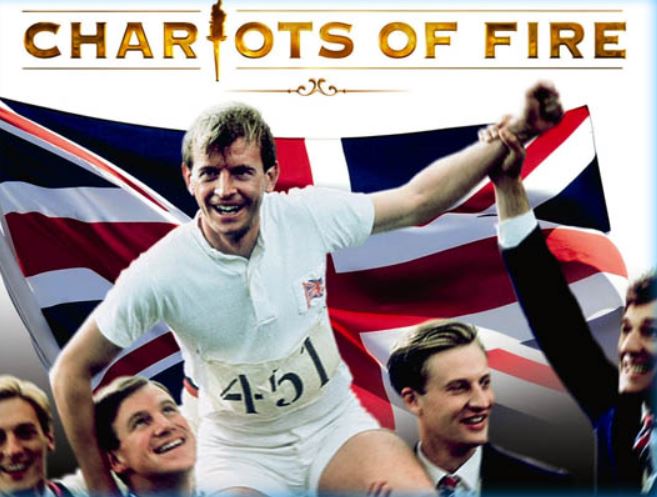
This makes Eric Liddell's admonition about glory all the more poignant. What is particularly noteworthy of Eric Liddell is not that he was the the Flying Scotsman was the first British Gold Medal winner in track from 1924, or that he was the basis of the film Chariots of Fire (1981), or his steadfast Sabbath keeping, but for dying as a missionary in a Japanese internment camp in China in 1945. We should all be inspired to run a good race in life and doing our best.
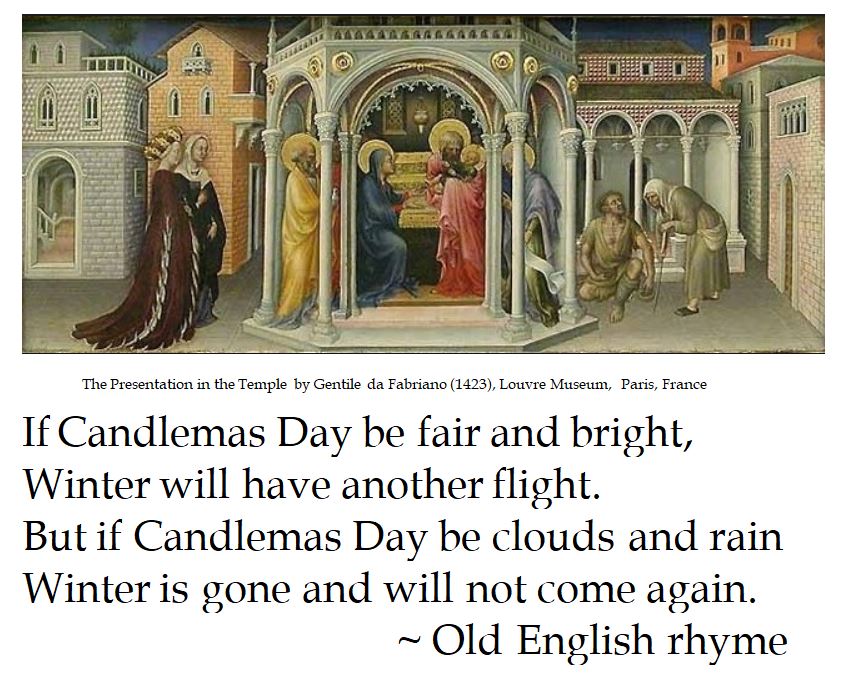
February 2nd marks 40 days after Christmas. On the liturgical calendar we celebrate the Presentation of Our Lord at the Temple, the traditional close of the Christmas season. It is also known as Candlemas, as the faithful traditionally processed into the church sanctuary with Candles. This ceremony re-presenting how the Mary and Joseph brought Jesus, the Light of the World, into the Temple. On the secular calendar, we celebrate Groundhog Day, awaiting the predictions of Punxsutawney Phil from western Pennsylvania on whether there will be six more weeks of winter (not Black History Month as some wags have wondered). This makes sense as it roughly is midwinter (especially prior to the Gregorian calendar adjustment of 1752). Unbeknowst to most, Groudhog Day has a direct connection to Candlemas. In eastern Europe, which focused on light and candles, there was a folk association between how much light was in the sky on Candlemas and God's providence in the months to come. Thus they believed that if there was a lot of light in the sky on February 2nd, there would be 40 more days of winter. Germanic peoples used an animal as their light detector, typically a hedgehog or a badger. When they immigrated to America, they adapted their instrument and used the plentiful groundhog.
"Blessed" Alan de la Roche, O.P. (1428-1475) was a 15th Century friar who is considered to be the restorer of the Dominican Rosary. Although Alan has no official Church feast day, he is unofficially honored on September 8th, which is also the feast for the Nativity of Mary.
According to Dominican tradition, St. Dominic (1170-1221) founded the Rosary in 1208 as a meditative prayer which sought to spiritually combat the Albigensian heresy (which believed that only spiritual realities were good and vehemently opposed God taking flesh in Jesus Christ). But this meditative Marian prayer featuring just the Angelic Salutation and the Evangelical Salutation fell into disuse during the 14th Century during the era of the Black Death in Europe.
In the mid 15th Century in a Dominican monastery in Brittany, Alan de la Roche experienced visions from the Blessed Virgin Mary and the Lord which eventually convicted him to revive and renew the Dominican Rosary. De la Roche was not the perfect emissary for this divine mission. At one point, Jesus appeared to De la Roche and said: "You have all of the learning and understand that you need to preach my mother's rosary, and you are not doing so. The world is full of devouring wolves, and you, unfaithful dog, know not how to bark." The latter phrase was a pointed wake up call to a Dominican like Blessed Alan, as the Order of Preachers held the moniker "Dog of God" (Latin domini canus which sounds similar to Dominicanus)
Blessed Alan stressed the 15 mysteries of the Dominican Rosary, rather than the alternative of 50 clauses of the Carthusian Rosary. Moreover, the 150 Hail Marys imitated the 150 psalms of the Old Testament, which harkened back to the proto-origins of the lay Marian psalter. Blessed Alan was successful at renewing popular devotion to the Rosary and reinvigorating the Confraternity of the Rosary. The Confraternity featured "after death" benefits for Rosarians. Thus Blessed Alan de la Roche may be considered one the greatest champions of the Rosary to ever live.
Although Blessed Alan wrote an instructional pamphlet Book and Ordinance regarding the renewal of the Dominican Rosary, about 1/3 of the Vatican documents were lost after Napoleon sacked the Vatican archives from 1810-1813. So much of quotable material about Blessed Alan comes from St. Louis de Montfort (1673-1716) whose 18th Century works True Devotions to the Blessed Virgin and The Secret of the Rosary were buried in a field in France for over 125 years, thereby escaping the irreligious impulses of the French Revolution.
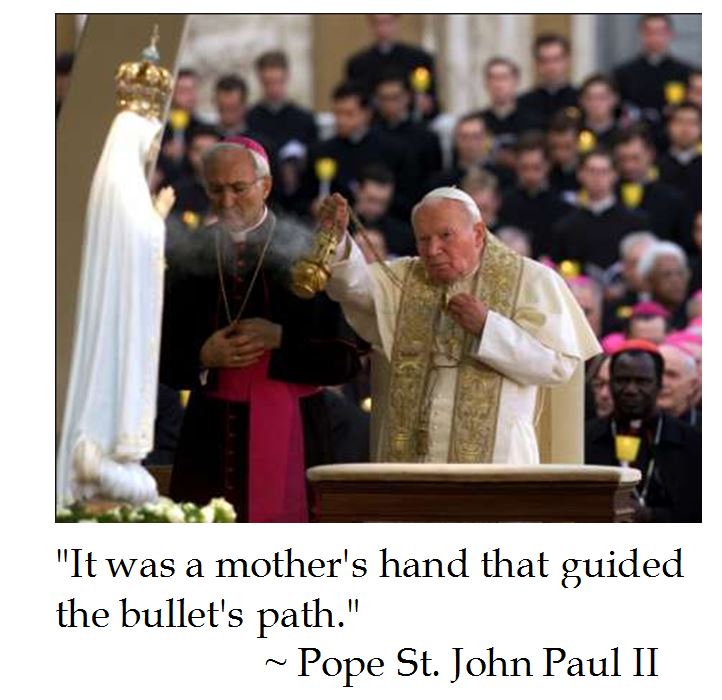
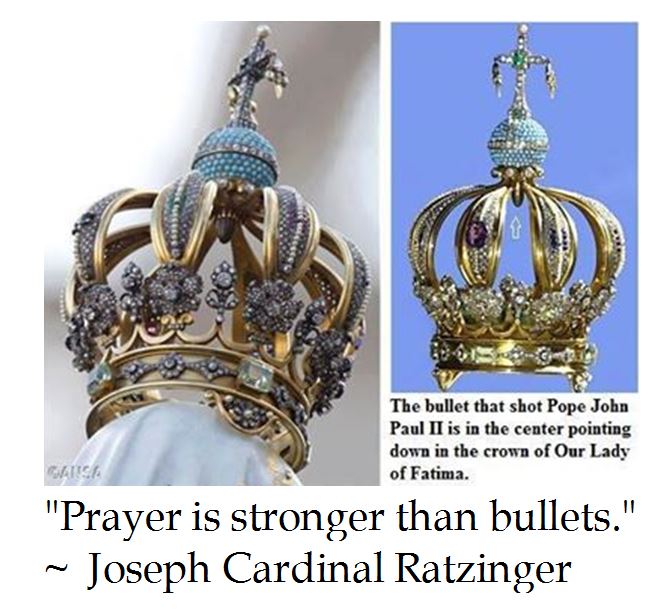
Pope St. John Paul II was so convicted that the Blessed Virgin Marry saved his life as the first apparition of the lady in white was on May 13th 1917 and he was shot on May 13th 1981. One year after the assassination attempt, JPII gave one of the bullets lodged in his body to be melded into the crown of Our Lady of the Rosary.
St. Leander of Sevilla (524-600 AD) was instrumental in instituting the recitation of the Nicean Creed during the Mass. Leander sought to combat confusion over the heresy of Arianism, which balked at the 324 AD Council of Nicea declaration that that God the Father was one in being with the Second Person of the Holy Trinity Jesus. This practice of clearly professing the tenants of faith in the Nicean creed spread from Spain to throughout the Universal Church. St. Leander came from a very devout Catholic family, like all of his siblings, in present day Cartegena, Spain. Leander first became a Benedictine monk and later was named the Bishop of Sevilla in 578. Leander's brothers St. Isadore and St. Fulgentius followed him as bishops of Sevilla. Leander's sister St. Florentina was a Abbess oversaw 40 convents and 1,000 nuns. St. Leander presided over the third Council of Toledo in 589 which decreed the consubstantiality of the Holy Trinity. Leander also created an important rule for nuns on prayer and the renunciation of the world. St. Leander's influence was much broader than the Iberian peninsula.by engendering the ire of a local king. To further combat Arianism amongst the Germanic rules in Iberia at the time. By praying to God through the mediation of Our Lady, Leander sought graces in his apostolate. His selfless prayers were answered and Leander achieved colossal conversions of Arian Christians, including Visogoth king's son. King Leovigild was enraged at these attacks and killed his own son while exiling Leander to Constantinople. It was there that Leander become close friends of the Papal Legate, the future Pope Gregory V, who he encouraged to write Moralia, a famous commentary on the Book of Job.
[L] Pope Gregory V presenting St. Leander with Moralia
In Spain, St. Leander is considered to be a Doctor of the Church.
Today in a ceremony in Manhattan, academics posthumously honored longtime Georgetown University professor Jan Karski, a man who tried to prevent the Holocaust by sharing the truth. Alas, politicians among the Allies were tardy to act of the news from Karski as the Messenger from Hell.
During the Second World War,I Karski was a Second Lieutenant in the Krakow Valvary Brigade who was captured after the battle of Tomaszow (1939) by the Russians. But due to Karski's birthplace, the Russians handed him over to the Germans, thus he avoided being a victim of the Katyn massacre of 1940. Karski escaped his German POW train in 1939 and escaped to Warsaw where he joined the Polish Resistance
movement. Larslo organized courier missions to the Polish Government in exile headquartered in Paris andhe himself made several secret trips to France and Britain. Karski was eventually
captured by the Gestapo and tortured in Slovakia but was later smuggled out and
rejoined the Polish Resistance.
In 1942, Karski was selected by Polish Prime Minister in exile Władysław Sikorski to go on a secret mission to gather first hand information about the Nazi atrocities in occupied Poland. Karski was smuggled into the Warsaw Ghetto. Karski also sought to infiltrate the Belzec death camp as an Estonian guard. Although Karski only managed to see a transit station, the horror that he witnessed first hand was appalling.
After briefing the Polish Government in exile upon his return to London in 1942, Karski met with other exiled Polish politicians and British Foreign Minister Anthony Eden about his first hand testimony about the Holocaust. In June of 1943, Karski traveled to the United States to personally brief President Franklin Roosevelt, as well as other American civic and government leaders, including Secretary of State Cordell Hull and Associate Supreme Court Justice Felix Frankfurter, without much effect. Karski published his recollections Courier from Poland: The Story of a Secret State (1944) which sold more than 400,000 copies.
Eventually Jan Karski settled at Georgetown University, eventually earning a Ph.D in 1952 and taught there for over forty years. Georgetown remembers Jan Karski as many things — a beloved professor, writer,
and colleague, to name a few — but to the world, he was known as one of the
first to warn Western powers of the horrors of the Holocaust.
Jan Karski at Yad Vashem (circa 1982)
Although Karski was a Roman Catholic, he felt a profound connection with the people whose lives he attempted to save from the Holocaust. In 1981, Karski said: “All murdered Jews
became my family. I am a Christian Jew.” In 1982 Karski was
recognized by Yad Vashem as Righteous Among the Nations.
In 1991, he received the Wallenberg Medal from
the University of Michigan for his outstanding humanitarian efforts. In 2012, President Barack Obama posthumously awarded Jan Karski the Presidential Medal of Freedom for his heroic witness to the ugly truth of the Holocaust. Mr. Obama proclaimed: "Jan Karski -- a young Polish Catholic -- who witnessed Jews being put on cattle cars, who saw the killings, and who told the truth, all the way to President Roosevelt himself."
"Whoever does not condemn, consents" mural in Warsaw
Karski's faithful witness has been remembered from murals in Warsaw to a series of five bronzes of Karski sitting on a bench playing chess created by Krakow sculptor Karol Badyna which are located in Georgetown, Manhattan, Lodz, Warsaw, Keilce and Tel Aviv University in Israel.
During the Cristeros War, Jesuit Fr. Miguel Pro was arrested under the pretext of being involved in af failed assassination attempt on former Mexican President Alvero Obregon. Fr. Pro was executed without a trail on November 23rd, 1927 under the orders of ardent atheist Mexican President Jose Plutarco Calles, who insisted on filming the capital sentence to send a message to the Catholics who were rebelling to preserve their religious freedom.
Before the firing squad did their military duty, Pro forgave them all and shouted the battle cry of the rebellion and profession of faith "Viva Cristo Rey" (or Long live Christ the King).
At the beatification of Miguel Pro in 1988, Pope St. John Paul II proclaimed:
Neither suffering nor serious illness, neither the exhausting ministerial activity, frequently carried out in difficult and dangerous circumstances, could stifle the radiating and contagious joy which he brought to his life for Christ and which nothing could take away. Indeed, the deepest root of self-sacrificing surrender for the lowly was his passionate love for Jesus Christ and his ardent desire to be conformed to him, even unto death
Dr. Martin Junge, the General Secretary of the World Lutheran Federation, noted that local Catholic and Lutheran churches carry different memories and different experiences of the Reformation. Junge acknowledged that some of them are painful. But Dr. Junge expressed optimism for future cooperation between believers of Christianity.
Hans Fiene, the driving force behind Lutheran Satire, took a tongue-in-cheek to marking the Quintcentennial of the Protestant Reformation.
It would seem that not all Protestants are the same.
While it can be a cathartic to chuckle about the past, this should be a short reprieve because of what faces Christendom. This is a time of great peril throughout the world for religious liberty as the faith is under attack by secular and sectarian forces. Thus, it is imperative that believers in Christianity recognize the commonality of our faith and work for Confident Pluralism. There may be aspects upon which we disagree, but we should apply the principles espoused by the Sixteenth Century Lutheran theologian Peter Meirdelin on "Unity on essential things, liberty on dubious things and charity in all things."
Jack T. Chick died at the age of 92 in Glendale, California. Chick was infamous for publishing fundamentalist Christian tracts in the form of comic books for six decades and distributed over 750 million copies and has been translated into over 100 languages.
Early in his evangelizing apostolate, Chick discerned that the most effective way to reach those who "weren't saved" was via comic books. Chick supposedly was inspired by the propaganda comics of the Chinese Communists in the 1950s. Chick was not a skilled artist but started to use others artists sketches and not attributing the pieces for a decade, until it came out that he was using Fred Carter's handiwork.
Chick was an intensely private person. He evangelized through comics because he was too shy to talk to others about his faith. Later, Chick became a recluse having no pictures taken of him (aside from two pictures from his teens). Chick also refused all professional interviews after 1975 because he was fearful that Catholics (particularly the Jesuits) would kill him.
Chick's personal paranoia carried over into his funny paper tracts. While he railed against rock and roll, homosexuality and witchcraft, Chick saved most of his spite for Catholicism. If one were to believe Chick. Catholicism was created by Satan, that Popes take their marching orders from the devil. Chick blamed the Jesuits for starting the American Civil War (and that the "men in black" backed the Confederacy) as well as the Ku Klux Klan (which hated Catholics).
In addition, Chick claimed that the Catholic Church supposedly started Nazism, Communism, Islam, Masonry, Jehovah's Witnesses, Mormons and the New Age movement. Chick pinned the assassination of Abraham Lincoln and John F. Kennedy on the Vatican as well as the Holocaust. Continuing in this craziness, Chick surmised that the Vatican runs the United Nations and global finances and the Illuminati.. Amongst the biggest whoppers was that the Vatican has a super computer that tracks the names of every Protestant in the world.
Naturally, in the end times Chick proclaimed that the Antichrist would be the last Pope. It must have really freaked Chick out that Pope Francis is from the Society of Jesus (i.e. a Jesuit). No surprise that Catholic anti-defamation groups chronicled Chick tracts for over three decades.
During the 1980s, Chick did eight comic books based on the testimony of Alberto Riviera, allegedly a former undercover operative of the Jesuits in Spain who was sent to infiltrate and destroy Protestant churches and institutions. Riviera claimed to have been secretly made a bishop but he had a conversion and became a fundamentalist preacher who saved his sister from a nunnery in London. Unfortunately, there are no public records of the clerical adventures of Alberto Riviera aside from Chick Publications.
Catholics weren't the only Christians spared from Chick's emnity, as he also attacked Southern Baptists (N.B. Chick was an Independent Baptism who believed in premillenial dispensationalism), and Latter Day Saints et ali.
Aside from the great volume of work that Chick Publications produced, Chick tracts were featured by the Smithsonian American History Museum in an exhibit on American Pop Culture. Even comic strip critics had to acknowledge Chick's work.
One of Jack Chick's early successes was an early 1960s tract of a playboy who dies and is forced to watch all of his life's foibles on a big screen before the pearly gates of Heaven. Perhaps during this Extraordinary Jubilee Year of Mercy, Chick's imagined screening of "This Was Your Life" at the Pearl Gates Cinescreen won't be taken as "The Nightmare World of Jack Chick" but will be viewed as a Comedy of Manners.
As word of Chick's death spread on social media, perhaps the kindest yet most ironic tribute came from a Catholic priest.
[L] Charles Haynes [C] John Inazu [R] Yuval Levin at Religious Freedom Center 10/28/2016 [Photo BDMatt]
The Religious Freedom Center at the Newseum gathered six scholars from eclectic perspectives and ideologies to consider “Our Fractured Republic, Religious and Political Divides and the Role of Pluralism”. The keynote speaker for the forum was Dr. John Inazu, a professor of law and religion at Washington University in St Louis. In a diverse nation, we must accept chaos, control or co-existence. Dr. Inazu postulated to achieve confident pluralism in America, we must protect the rights of assembly and association, facilitating civil dissent in public forums and not allow government orthodoxy to discriminate in funding. There seemed to be across the board agreement by the forum to these noble ends of confident pluralism. The challenge seems to be inspiring a tolerance for differences in co-existence while respecting others and allowing for a space for difference. Tolerance along with humility and patience helps build a common ground without finding a common good. But this idyllic existence is mooted by the litigious manner in which contentious public policy is implemented. Conservative commentator Yuval Levin lauded localism, which allows contending parties to put a face on their opposition and possibly find compromises. Yet most First Amendment controversies are pushed by outside forces and look to establish bright line rules which curtail the fundamental freedom of believers. The panel seemed to agree that the Indiana Wedding Cake controversy could have been easily averted if LQBTQQ?? couple would have looked for a baker who did not object to participating in their nuptu\ial ceremony. However, this naively assumes that the homosexual activists were just looking for a baker instead of a target to test RFRA through litigation and to possibly hurt politicians who supported the Religious Freedom Act (such as Indiana Governor and Republican Vice Presidential nominee Mike Pence). To be fair, it was observed that the Indiana RFRA kerfluffle was used as a wedge issue by both sides. Another instance in which common sense could quash controversy concerns physicians who morally object to filling certain prescriptions. Clearly, what was meant is abortofacients, but the mere mention of contraception or abortion would wreck a spirit of compromise. With the caveat that another in-house pharmacist could fill the script without controversy or inconveniencing the customer, this would be a terrific compromise. Alas, that is not generally the way things go in America nowadays. State licensing boards have demanded that doctors must be able to fill all prescriptions. Moreover, the HHS Mandate read into Obamacare almost deliberately picked a fight with the Little Sisters of the Poor to force them to violate their consciences to have contraception coverage. Thus, progressives have shown they value capitulation rather than compromise for religious liberty. Dr. Charles Haynes, the founding director of the Religious Freedom Center, drew upon his decades of experience with First Amendment issues in public schools, contended that we are capable of finding pluralism but what we lack is trust. Perhaps, but this sense of optimism should be tempered by the autocratic manner in which the Department of Education is forcing implementation of transgender bathrooms in public schools, despite debate and locally achieved compromises. The same ukases can be applied to hot button religious liberty issues in which Washington threatens funding unless it it done the Feds way.
The assembled panel universally took umbrage to efforts to forestall an implementation of Sharia Law as being anti-Muslim Islamophobia. The manner in which there has been propaganda and suspicion cast against American Muslims was likened to the virulent anti-Catholicism of the 1850s No-Nothing Party. In fact, the parallel was extended as Catholics in the past were considered to support a foreign prince (i.e. The Pope) thus their loyalty to America was considered suspect. There was general assent to the idea that in 50 years, Muslims may just be considered another religious faction with conservative cultural predilections. Of course, this sunny take ignores that Islam is a holistic system which merges worship with the body politic, particularly in places which it gains a significant minority or de facto majority status. In such circumstances, it becomes quite challenging to live a confident pluralism. This rosey take also is blithely unconcerned with the significant funding of mosques from Salafist sources. Furthermore, it dismisses polling of American Muslims which shows majorities agreeing with jihadist activities. But for this crowd, mentioning these inconvenient truths may make one a pariah in polite “educated” circles. The ray of hope for confident pluralism was extolled in Utah. In 2015, Mormon church leaders worked with LGBTQQ? activists to pass a bill which banned homosexual discrimination in housing and employment, which protecting religious organization and their institutions and also included a “carve out” for people with conscience objections. It was hoped that the “Utah Compromise” could be a template for the rest of the nation.
It should be noted, however, that Utah has some special circumstances which may make it more of an outlier rather than a vanguard of confident pluralism. Utah is a small, relatively homogeneous state that is dominated by the Latter Day Saints Church. Mormons may be acutely aware of minority rights considering their tenuous status in much of the 1800s. While the spirit may be willing to act as a model, it may be impossible to replicate this cooperation elsewhere, especially when gadflies can wreck havoc on institutions and long accepted social norms, and when progressive power can dictate from bureaucracies, executive action and the courts. While it was pleasant not to have an event in which public figures exchange insults like in Election 2016 debates, the general consensus of this Religious Freedom Center panel sometimes lacked a rigor on mediating profound differences. It seemed reminiscent of a United Council of Churches pronouncement which acceded to the same general vision, albeit via different paths. Considering that many of the hot button issues affecting religious liberty today are LGBTQQ?, gender equality, immigration and abortion, it is a pity that a Catholic scholar who represented the Magisterium (Catholic Church teachings) was not there to mix it up. There may have been some illuminating agreement as well as an opportunity to invoke compromise.
The Feast of the Exaltation of the Holy Cross (also known as Roodmas) is a solemnity which celebrates three distinct historical events: the finding of the True Cross by St. Helena, the retrieval of the sacred relic by Emperor Heraclius in 629 from the Persians and the ineffable powers of the instrument of Christ's redemptive sacrifice and our salvation. According to the Brevery, the Emperor Heraclius carried the Cross back to Jerusalem on his shoulders as he was garbed in fancy garments adorned with precious stones. But at the entrance to Mount Calvary, the Emperor could not carry the Holy Cross up. The bishop said to the astonished Heraclius:
"Consider, O Emperor, that with these triumphal ornaments you are far from resembling Jesus carrying His Cross." The Emperor then put on a penitential garb and continued the journey.
This offers a lesson of humble service which fits into the lesson of Merciful Love associated with the Holy Cross . The Church exalted the Holy Cross just as Moses lifted up the Bronze Serpent in Exodus and those who looked upon it lived. Jesus willingly sacrificed Himself so that we all may enjoy eternal life.
In the early 20th Century, Sister Maria Teresa Desandais was blessed with mystical experiences about Jesus' Merciful Love. She wrote about these experiences under the pseudonym "Sulamitis PM". In 1912, Sr. Desandais, who had no training in painting, was inspired to create the picture "Merciful Love" which depicted Christ crucified looking towards heaven with a host in the background with the initials JHS. Rays of light emanating from the Sacred Heart of Jesus illuminate a Bible laying at the foot of the cross turned to the passage "Love one another as I have loved you" alongside a crown. That is an incredible amount of symbolic meaning suffused in one scene, particularly for an amateur painter.
This message of Merciful Love was widespread in France and Spain after the First World War. To bolster devotion to Merciful Love, Sr. Desandais sent two of her paintings to Spain. The painting sent to Juana Lacasa effectively became a place of pilgrimage. The other painting was installed at the Royal Basilica of Our Lady of Atocha in Madrid where Sister Maria Teresa's order was attached.
It is quite conceivable that the message of Merciful Love of Jesus with the exhortation to be servants who love one another may well have influenced Pope Francis for the Year of Divine Mercy.
Part of Sister Maria Teresa's revelations was an offering to Merciful Love:
Holy Father, through the Immaculate Heart of Mary, I offer to you Jesus, your beloved Son, and I offer myself in Him and through Him, and with Him for all your intentions, and on behalf of all creatures.