Showing posts with label Videos. Show all posts

Wednesday, February 3, 2021

Watering Down Baptism?

 While listening to Personally Speaking, a  Catholic interview program hosted by Monseigneur Jim Lisante, the prelate host shared sua sponte that he recently was approached by two lesbians who sought to have their child baptized.  Despite being turned away at two other parishes, the priest proclaimed to the couple:  “There isn’t anything in the bible about being gay so it must be OK” thus he consented to perform the sacrament.

The cleric’s superficial scriptural analysis speciously seems to ignore Jesus’ perspective on marriage in MT 19 as a married man and woman become one flesh. That passage clearly does not include alternative arrangements.   But the conundrum is on the propriety of baptizing a child to parents who manifestly are living contrary to the teachings of the church. 

While I appreciate the pastoral inclinations, the scenario calls into question the rationale for the sacrament of initiation and what is involved in infant baptism. Ideally, baptism claims the person as a child of God with an indelible mark on the soul. But an infant is unable to make baptismal promises, so those proclamations of faith are made by parents and godparents. Thus, pastoral discernment is required of the parents and godparents

Canon 1255 anticipates that the faith promise given infant baptism be supplemented by the parents, godparents and community.  In Acts 2:38 St. Peter exhorts us to “Repent and be baptized” which requires a metanoia (i.e. turning away from sin) in those professing the faith.

Practically speaking, the faith must be nurtured by the practice in the home church as well as with the People of God. The difficulty is when parents are living lives that are manifestly and publicly contrary to the tenants of the faith.

Those inclined to seek the mercy of God would surely say that an innocent child should not be punished for the sins of the parents.  But baptism involve promises made in rearing the child in the faith.   In this scenario, we can assume that they are living as a same sex couple and have pride in their lifestyle.  If one of the couple is biologically the mother, it raises issues about artificial insemination or procreation outside of marriage. This would mean that a child would be expected to be raised in the faith by a couple co-habitating outside of sacramental marriage and with orientations that the church teaches are disordered? 

 Despite Monseigneur Lisante’s claims, the Church in Canon 2357 considers homosexual acts as intrinsically disordered.   It is unclear if the couple was civilly married but the Church does not recognize such unions as being covenantial or sacramental. Perhaps the couple was not church going and those pastors deemed the sacrament of baptism being used as a ritualistic rite of passage rather than a conferral of grace.

Near the beginning of Pope Francis’ papacy, the Holy Father chided young priests to not become “little monsters” doggedly adhering to doctrine but instead to focus on compassion, evangelization and inclusion.  In that spirit, pastors may be reluctant to turn away anyone from the Church, even if adherence to baptismal promises made for them seem tenuous so as to see if takes hold. This calls to mind the conversion story of Fr. Donald Calloway who was baptized at age ten at the behest of Episcopalian kin even though his parents were not practicing their faith.  The only thing that he remembered from his baptismal sacrament of initiation was the donuts they eat afterwards.  Hearing his hair raising testimony, the graces of baptism did not take from merely that liturgical ritual.  Is it merciful to give the impression that one is saved by baptism but has no context to living properly as a Catholic Christian?

Pope Francis’ encyclical, Amoris Laetitia, attempted to reconcile the practice of the Catholic faith with the Modern Family.  Pope Francis declared that marriage was between a man and a woman for life (para. 62), same sex unions can not be equated with marriage (para. 52) and that education is the of a child is the “primary right” of parents (para. 84).  It is hard to believe that the child would be brought up in the ways of the church in the aforementioned scenario, which argues against  a profligate administration of baptism.

Pro arguendo, one could attempt to apply the logic of Chapter Eight of Amoris Laetitia in this instance.  After all, Pope Francis opined that pastors ought not throw moral stones and be done with irregular situations.  In footnote 351, the Holy Father sought to reconcile those in irregular marriages (Catholics civilly remarried after a divorce without obtaining an annulment) with the Church through a circuitous procedure in lieu of canon law.  

This alternative approach required extensive pastoral counseling for the couple so they could understand the wisdom of the Church and conforming their lives to the teaching.  In conforming irregular marriage to the norms of the church, the couple would need  to be catechized and gain an informed conscience. If children were a consideration and couples could not easily separate, so they would be enjoined from marital relations in order to receive the sacraments. And the couple would be encouraged to join another parish so as to avoid the appearance of scandal.  Of course, that is asking a lot. But the Gospel exhorts us: “The kingdom of God is at hand. Repent, and believe in the gospel.” 

So how would this Amoris Laetitia logic be applied to parents of a child seeking baptism who are flagrantly living their lives contrary to Church teachings?  That’s the rub.  Those making the baptismal promises are more than falling short of virtue.  They are publicly living their lives contrary to the teaching of the Faith.  Amoris Laetitia anticipates some metanoia as well as a resolve to sin no more.  Is it reasonable to expect the child to be raised under the Church’s precepts, particularly with the Home Church defies the theology of the body and a sacredness of the covenant of marriage?  

In America, we fret about the lack of Sunday Mass by many baptized Catholics  and of the glaring lack of understanding of fundamental precepts of faith (e.g. the Real Presence in the Eucharist). So many poorly catechized Catholics are poached by Evangelical denominations since they hunger for the divine, but are sacramentalized but not catechized.  So much for the fruits from the Church of Nice. For seekers of Divine Truth, it is disheartening if they discover that were holy fools for playing by the rules because mercy to the unrepentant overrides all.

While it sounds merciful to baptize a child from a proud lesbian couple, sadly it seems that the child would be left as a spiritual orphan through a perfunctory ceremony which waters down the sacrament.


Sunday, January 24, 2021

St. Francis de Sales on Inner Peace


These are calming words of wisdom from a Doctor of the Church at a time when it feels as if the sky is falling.

Hallelujah for the patron saint of Catholic writers and the Catholic press. 


Thursday, November 15, 2018

USCCB President Cardinal Di Nardo on Episcopal Accountability

USCCB President Cardinal Di Nardo on Episcopal Accountability


At the last minute request of the Holy See, the Fall meeting of the United States Conference of Catholic Bishops (USCCB) was shifted away from taking concrete action about Episcopal Accountability crisis, which was sparked by revelations of former Washington Archbishop Theodore (call me "Uncle Ted") Mc Carrick. Pope Francis may do something more in the planned February gathering.


Veteran Vatican watcher Rocco Palmo quoted an unnamed bishop who sardonically quipped that the Holy Father's intervention wall well unite the USCCB.


USCCB President Cardinal Daniel Di Nardo urged the assembly to be vigilant about sexual misconduct in their dioceses. However, it was surprising that the USCCB voted not to press the Vatican to release all information pertaining the les affairs McCarrick

While a bishops' conference may not canonically have the jurisdiction to reprimand a malfeasor brother bishop, the request from the Vatican to eschew action on the sexual accountability crisis was horrible optics.


Saturday, July 28, 2018

On the First American Martyr, Blessed Stanley Rother

Blessed Stanley Rother on Being a Pastor


Stanley Rother was a farmer priest coming from the Diocese of Oklahoma and Tulsa.  He struggled academically and was dropped from his first seminary but was given a second chance at Mount St. Mary's Seminary in Emmitsburg, Maryland.  He was ordained in 1963 and served in Oklahoma until 1968, when he answered a calling to be a missionary to Mayan Catholics in Southern Guatamala. 

Fr. Rother's faith and solidarity with his rural agrarian parish endeared him to the natives and increased their faithful participation in church life.  In late 1980, Fr. Rother witnessed a disappearance and torture of some of his parishioners.  When Fr. Rother learned that he was also on a hit list, he briefly returned to the United States to visit family and contemplate how to fully live his vocation.  Fr. Rother returned to Mount St. Mary's Seminary to discern what to do.  Despite being warned that his life was in danger, he sought to return to his mission to celebrate Easter with his people.

Fr. Rother was murdered, presumably by paramilitaries, in his rectory on July 28th 1981.  His people loved him so much that his Mayan parishioners wanted to keep the relic of Fr. Stanley's heart at their simple parish, while the rest of the remains were repatriated to Oklahoma.

Pope Benedict XVI declared Stanley Rother a Servant of God in 2009.  In 2016, Pope Benedict recognized Stanley Rother as having being killed "in odium fidei".   Blessed Stanley Rother's beatification mass was held before an overflow crowd of 20,000 in Oklahoma City on September 23, 2017.  


Blessed Stanley Rother's feast is on day of his martyrdom when he entered into eternal life on July 28th. 


Sunday, February 25, 2018

Thomas Merton on Spiritual Union

Thomas Merton on Spiritual Union

Prayer of Thomas Merton 

My Lord God, I have no idea where I am going.

I do not see the road ahead of me.

I cannot know for certain where it will end.

Nor do I really know myself,

and the fact that I think I am following your will does not mean that I am actually doing so.

But I believe that my desire to please you does in fact please you. 

And I hope that I have that desire in all that I am doing.
I hope that I will never do anything apart from that desire.
And I know that if I do this, you will lead me by the right road
though I may know nothing about it.

Therefore I will trust you always,though I may seem to be lost and in the shadow of death.

I will not fear, for you will never leave me to face my perils alone. 
Amen.


Thursday, February 22, 2018

Celebrating the Chair of St. Peter

Pope Benedict XVI on celebrating the Chair of St. Peter

It may seem a bit unusual that the Catholic Church celebrates the Feast of the Chair of St. Peter.  The feast which has been marked since the Fourth Century is more than , however, is more than a celebration about an ornamented seat  in the apse of St. Peter's Basilica at the Vatican.  It also represents the spiritual authority of the Church.  

The Church used to celebrate the Chair of St. Peter on January 18th and February 22nd. But in 1960, Pope St. John XXIII removed the January 18th feast, but the February 22nd date became a second class feast. 

Original Chair of St. Peter Woodcarving
Chair of St. Peter woodcarving, from Wood Carvings in English Churches (1910)


The wooden throne was a gift from Holy Roman Emperor Charles the Bald to Pope John VIII in 875. The original portion of Cathedra Petri is a plain oaken arm chair made of worm eaten wood. This chair has been cut in various spots, presumably for relics. During the Middle Ages, the Chair of St. Peter was displayed once a year as well  the sedi gestoria as when a newly elected Pope was enthroned. 

To preserve the precious relic for posterity, Pope Alexander VII encased the Chair of St. Peter into a bronze throne designed by Bernini, who augmented the Throne of Peter from 1647-1653.  The Chair of Peter is supported by statues of four doctors of the Church-- St. John Chrysostom and St. Athanasius from the East and St. Augustine and St. Ambrose from the West. Bernini's design seems to have the cathedra hover over the apse altar lit by a window with a dove (representing the Holy Spirit) and is surrounded with gilded glory sunrays and sculpted clouds.  On the frieze above the altar is the inscription "O pastor of the Church, you feed all Christ's lambs and sheep" in Latin and Greek.


In the first year of his pontificate, Pope Benedict XVI noted:

Celebrating the "Chair" of Peter, therefore, as we are doing today, means attributing a strong spiritual significance to it and recognizing it as a privileged sign of the love of God, the eternal Good Shepherd, who wanted to gather his whole Church and lead her on the path of salvation.

H/t: National Catholic Register 


Saturday, February 10, 2018

Commemorating the Sacrifice of the Smallest Cristero Soldier: St. Jose Sanchez del Rio

St. Jose Sanchez del Rio on the Will of God


St. Jose,Littlest soldier of Christ,who's last bloody stepsbrought you to the arms of Our Lady and Our Lord,keep healthy and strongthe steps of Our Lord's soldierswho remain here on Earth,so that they may have your strength to endure and preserve to the end.Via Cristo Rey!Amen

Friday, February 9, 2018

Being At Peace With Different Measures of Glory


Athletes from Unified North & South Korean Team at Winter Olympics
The 23rd Winter Olympics in Pyeongchang, South Korea are themed to be the games of peace.  This was accentuated by athletes of the Republic of Korea (South Korea) marching with their Democratic Peoples Republic of Korea (North Korea) counterparts under a unified flag.


Olympic Athletes from Russia for 2018 Winter Olympics 
Due the doping ban on Russian Federation, the 169 clean Russian athletes marched as neutrals in red and grey uniforms as neutrals.  Any gold medal winning "Olympic Athletes of Russia"  will be feted with the raising of the Olympic flag and anthem. 

While the  2,952 athletes participating in the Pyeongchang games are the best winter sport athletes in the world, but only a few make it up to the medal stand to receive their glory. For most, marching in the Winter Olympics opening ceremony is the highlight of their careers. 


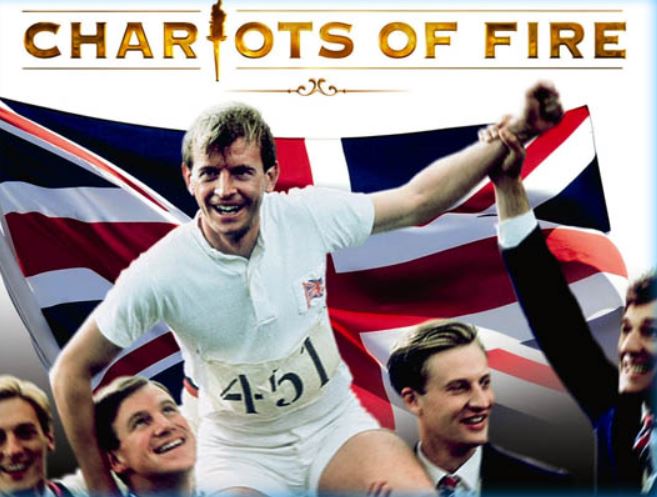
This makes Eric Liddell's admonition about glory all the more poignant. 


Eric Liddell on Glory

What is particularly noteworthy of Eric Liddell is not that he was the the Flying Scotsman was the first  British Gold Medal winner in track from 1924, or that he was the basis of the film Chariots of Fire (1981), or his steadfast Sabbath keeping, but for dying as a missionary in a Japanese internment camp in China in 1945. 

We should all be inspired to run a good race in life and doing our best.


Thoughts on Faith and American Life from the National Prayer Breakfast

President Donald Trump on Faith and American Life at National Prayer Breakfast


President Donald Trump spoke at the 66th annual National Prayer Breakfast, during which he bolstered lofty rhetoric about faith and American life by pairing it with contemporary examples of how we can be heroes to everybody. 


Tuesday, February 6, 2018

St. Paul Miki on the Christian Way

St. Paul Miki on the Christian Way


St. Paul Miki's wisdom about the Christian Way was all the more remarkable as he said this as the Japanese Jesuit  was being martyred with a score of Jesuit and Franciscan companions by being pierced with spears on crosses by a Japanese shogun's soldiers. 


Friday, February 2, 2018

Connecting Candlemas to Groundhog Day

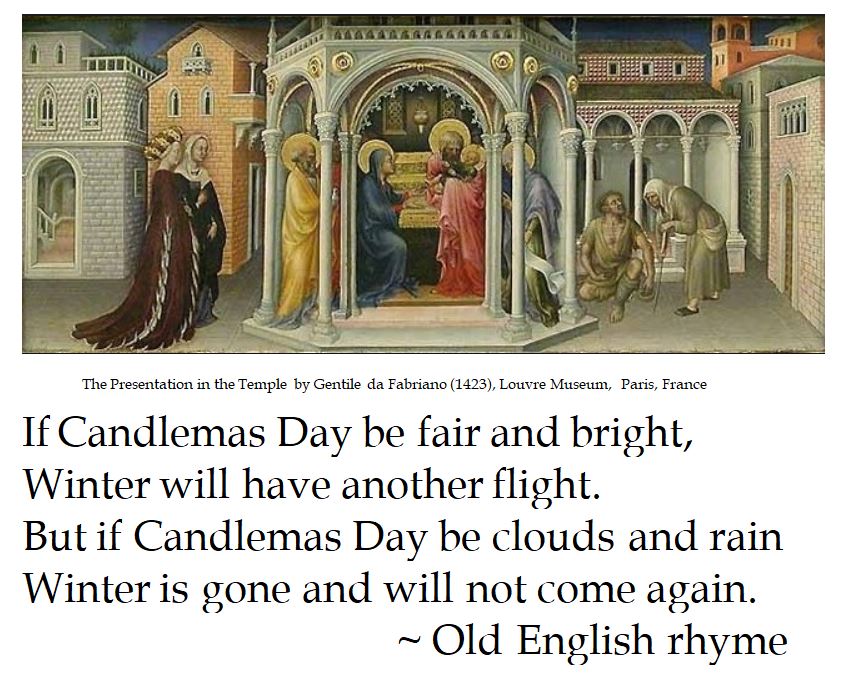
An old English rhyme celebrating Candlemas, the Presentation at the Temple of Jesus, the light of the world


February 2nd marks 40 days after Christmas.  On the liturgical calendar we celebrate the Presentation of Our Lord at the Temple, the traditional close of the Christmas season. It is also known as Candlemas, as the faithful traditionally processed into the church sanctuary with Candles. This ceremony re-presenting how the Mary and Joseph brought Jesus, the Light of the World, into the Temple.


On the secular calendar, we celebrate Groundhog Day, awaiting the predictions of Punxsutawney Phil from western Pennsylvania on whether there will be six more weeks of winter (not Black History Month as some wags have wondered).  This makes sense as it roughly is midwinter (especially prior to the Gregorian calendar adjustment of 1752).  Unbeknowst to most, Groudhog Day has a direct connection to Candlemas.

In eastern Europe, which focused on light and candles, there was a folk association between how much light was in the sky on Candlemas and God's providence in the months to come. Thus they believed that if there was a lot of light in the sky on February 2nd, there would be 40 more days of winter.  Germanic peoples used an animal as their light detector, typically a hedgehog or a badger.  When they immigrated to America, they adapted their instrument and used the plentiful groundhog.