Showing posts with label Elections. Show all posts

Friday, October 14, 2016

Archbishop Chaput Comments on Wikileaks Catholic Bashing and the 2016 Election


Wikileaks has released some batches of John Podesta's emails which reveal that Hillary Clinton confidants have some scathing views of Catholics.  Some had suggested that there should be a "Catholic Spring" to overthrow "a middle ages dictatorship" and impose a democratic cult which honors gender equality (and presumably progressive approaches to hot button social issues).  Other emails mocked how conservative Catholics were pseudo-intellectuals who spouted sophisticated sounding nonsense.

Philadelphia Archbishop Charles Chaput responded to these scathing critques stemming from the highest echelons of Hillary Clinton's 2016 Presidential campaign.
Archbishop Chaput responds to Wikileaks Podesta emails mocking Catholics and commenting on the 2016 Election


It is quite  a clever turn of phrase of Archbishop Chaput to quip:"In a nation where 'choice' is now the unofficial state religion, the menu for dinner is remarkably small." Chaput pithily impeaches America's obsession with choice (abortion), reflects on dangers to America's tradition of religious liberty while lamenting the paucity of choices to be elected Commander-in-Chief.

Not withstanding the sardonic style of the riposte, Archbishop Chaput has consistently eviscerated both major party Presidential candidates, as seen from his recent speech at Notre Dame University.


We love to label in order to create intellectual order in our minds.  But terms like liberal and conservative do not translate well into Church politics.  Archbishop Chaput can be considered a conservative in Church circles, as he is cautiously embracing implementation of the New Mercy contained in Pope Francis' Apostolic Exhortation Amoris Laetitia.  However, it would be mistaken to automatically assume that Chaput is a political conservative or would ever vote for Donald Trump.

It is a pity that Archbishop Chaput was passed over to be named a Cardinal  by Pope Francis' recent announcement for the November 19th consistory.  Philadelphia, like the large Catholic Archdiocese of Los Angeles, is traditionally blessed with a Cardinal.  Pope Francis, however, chose three "red hats" which went to Dallas, Indianapolis and to Archbishop Blase Cupich from the longstanding Cardinal seat of Chicago.

Wednesday, March 6, 2013

Thinking In Time About Conclave 2013

Since Pope Benedict XVI announced his impending abdication, there has been an alluvia of interest in who will succeed the German Shepherd as the Vicar of Christ.  Speculation in the secular media has centered on superficialities, like whether the Italians will “take back” the Chair of St. Peter.  Other reports evaluated the angle of European cardinals voting en bloc to keep the papacy in the Old World.    Many media types were energized by the prospect of a Pope who did not emanate from Europe.

To keep American audiences interested, there was obligatory appraisals of an American Pope.  But much of the excitement in the secular press was the drum beat for a third world pope, especially from Africa.   Actually, there have been three Popes born in Africa, Pope St. Victor I, Pope St. Militiades I,  and Pope St. Gelasius I. 


[L] Pope St. Victor I, [C] Pope St. Militiades, [R] Pope St. Gelasius I
But these early Church pontiffs were Berbers from the Maghreb, so the Lamestream Media might not consider them worthy of being considered African or third world according to politically correct sensibilities. Even Fox News Channel was touting the merits of several Latin America papabili, which should have gladdened the hearts of an emerging viewing demographic. 

At this point, anyone who claims that they know who will be elected the next Supreme Pontiff is blowing sfumata out of what is decidedly not the Sistine Chapel smokestack. While current Canon Law does not prohibit placing wages with Paddy Power on the next pope, it would be foolish to do so, especially before the College of Cardinals sets the date and the Holy Spirit works with the electors. 


 In the coming days, it may be interesting to evaluate some of the papabili to appreciate who will lead the world’s 1.2 billion professed Catholics.  To do so seriously, one ought to abandon the siren calls of nationality or skin tone and discern deeper.  A good way to achieve this objective is to think in time.  By considering the past papal conclaves since 1900, one can appreciate trends, how external circumstances influence Conclaves as well as the attributes of the prior Pope. 

The numbers of Cardinals participating have grown from around 60 to around being capped at 120.  This Conclave will have 115 electors.  It used to be that the vast majority of  Cardinals were European (and about half hailing from Italy.  This the Papacy was seen as the Italian Job (sic) in secular European politics.  After the 1938 Conclave, more Cardinals were appointed from throughout the world, to recognize the global impact of the Catholic Church.  Today, just over half of the Cardinals are from Europe, and only 22% are from Italy.  The United States has eight Cardinal electors, and Canada has three.   There are 22 Cardinals who have been appointed in the last year.

There have been nine Conclaves since 1900.  With the exception of 1978, the year of three Popes, a large majority of the electors have been appointed by the immediate predecessor.  Popes are more likely to appoint Cardinals who agree with their theological weltanschauung. Hence, it is folly to think that there will be a radical break in theology in the succeeding Supreme Pontiff. 

 Be that as it may, there is a change in character with the change in Vicars of Christ.  Some of this is inevitable as everyone brings their own experiences and tendencies to the Chair of St. Peter.  But the College of Cardinals can consciously choose a leader with a different tenor.  As the Roman expression goes “A fat pope followed by a thin pope.”  This vivid expression is not only  an aesthetic aphorism, but it implies leadership qualities.  Svelte Supreme Pontiffs can be taken as being severe or more doctrinally oriented, whereas portly popes can be perceived as pastoral or jolly. 

 In the 1922 Conclave, the College of Cardinals choose a physically vigorous Archbishop Achille Cardinal  Ratti of Milan to become Pope Pius XI to replace a more sickly pastoral Pope Benedict XV ( né   Giocomo dell Chiesa, Archbishop of Bolognia).  A similar prima facie physical contrast went into the 1958 Conclave where a pastoral, portly Angelo Roncalli, Patriarch of Venice became Pope (Blessed) John XXIII to replace a lean Pope (Venerable) Pius XII (   Eugenio Cardinal Pacelli, the Vatican Secretary of State).

Another folk pope philosophy is “Young pope, old pope.”  Not that the College of Cardinals are simply contrarian.  But after Pope Leo XIII’s 25 year reign, the Conclave eventually chose Pope (St.) Pius X (  Giuseppe Melchiorre Sarto, the Patriarch of Venice) at age 67, who only reigned for 11 years.   After the nearly 19 year pontificate of Pope Blessed Pius XII, the 1958 Conclave chose the man who became Pope John XIII , who was elected at age 77.  It was widely presumed that Pope John XIII would be a caretaker Pope.  Little did anyone realize that this avuncular old “Good Pope John” would initiate an “aggiornamento” which called for a Church Council more widely known as Vatican II.  After the 25 ½ year reign of Pope (Venerable) John Paul II (   Karol Józef Wojtyla, the Archbishop of Krakow, Poland), the 2005 Conclave chose 78 year old Benedict XVI (ne Josef Ratzinger, the prefect of the Congregation for the Doctrine of the Faith and former Archbishop of Munich and Freising, Germany).  In the 1958 Conclave, some apocryphal sources claim that French Bishops voted in a bloc to intentionally choose someone old. 

Thus there is some wisdom to that folk maxim.  The average age of those as  Pope in the last nine Conclaves has been 64.8 years.  This includes Pope Benedict XVI elected at age 78 and Pope John XIII elected age 77.  Conventional wisdom amongst Conclave speculators for serious Papabili is between the ages 60 and 72, but we can not limit the wisdom of the Holy Spirit in helping the electors discern.


Cardinal Mariano Rampolla
Austrian Emperor Franz Josef I
While the term for the College of Cardinal’s election is Conclave, which refers to locking them away (with key) so that they can choose who should next lead the Roman Catholic Church, the outside world can loom large in their decision.  In the 1903 Conclave, which did not strictly observe the secrecy of the process, secular political forces attempted to influence the election.  Going into the 1903 Conclave, it was widely expected that Vatican Secretary of State Cardinal Mariano Rampolla would be chosen to replace the 93 year old predecessor.  But the Austrian Emperor Franz Josef I harbored a grudge against Rampolla, who denied the Emperor’s son a proper burial after a suicide and perhaps for supporting the Third French Republic as Vatican Secretary of State (or that Rampolla was a freemason and a Modernist).

Cardinal Jan Puzyna
During the third ballot of the 1903 Conclave, Cardinal Jan Puzyna of Krakow, acted as his Emperor’s cat’s paw and exercised an imperial  veto.  The Conclave did not recognize the  jus exclusivae action and Rampolla actually gained more votes on that ballot.  But the delay allowed Cardinal Giuseppe Sarto to gain more traction and eventually become elected as Pope (St.) Pius X.


Securing the rights for a secular status of the Holy See was another thing that the College of Cardinals needed to consider when choosing a Pope.  The loss of the Papal State in 1870 left the Holy See in a quandary vis-a-vis the newly united Kingdom of Italy so Popes effectively became prisoners of the Vatican until this issue was resolved.  The election of Pope Pius XI in 1924 (  Cardinal Achille Ratti) who had significant experience in the Vatican diplomatic corps.  This helped facilitate the Lateran Pacts with Italian dictator Mussolini, which create the Vatican State.  Pope Pius XI also resolved relations with France.

The Conclaves also may have sought to impact the political world with their choice for the Supreme Pontiff.  For the first Conclave of 1978, the cardinals chose Pope John Paul I (  Albino Luciani, the Patriarch of Venice) as some have opined that his election and governing style may influence Italian politics. Of course, the world would never know as "Il Papa del Sorriso" (the Smiling Pope) only occupied the Chair of St. Peter for 32 days.    

For those who subscribe to the Siri Thesis, the 1958 Conclave initially chose Giuseppe Cardinal Siri, the Archbishop of Geneo, who was theologically conservative but also an avid anti-communist.  Supposedly French Bishops suppressed this choice out of concern about antagonizing the Cold War.  

On the other hand, the Second 1978 Conclave chose Cardinal Karol Józef Wojtyla, the archbishop of Krakow, Poland as Pope John Paul II who not only was from a Catholic Communist country but who had a reputation for gently challenging the powers that be for freedom of religion.

Pope Benedict XV
The College of Cardinals certainly considers the signs of the times when choosing the head of the Catholic Church.  The 1914 Conclave occurred during the opening days of World War I.  This 1914 Conclave pitted cardinals from Great War Axis nations Catholic Austria and Protestant Germany against Allied Protestant nations the United Kingdom (with Catholic Ireland) and Orthodox Russia with Catholic France.  Reputedly, the cardinals all played well together and by the 10th ballot elected "Il Piccalito", Pope Benedict XV (  Giocomo dell Chiesa, Archbishop of Bologna), who had some experience in the Vatican diplomatic corps.  

Pope Benedict XV was unsuccessful in causing a cessation of hostilities or having a place in the Paris Peace conference of 1919, some of his ideas seemed to have been incorporated into Wilson’s Fourteen Point Plan.  But Pope Benedict XV was active in engaging in a diplomatic offensive to secure the rights of the faithful in post-war Europe.  Benedict XV also led by issuing Ad Beatissimi Apostolorum in November of 1914 by calling the Great War “the suicide of Europe.”

Pope Pius XII
The 1939 Conclave to replace Pope Pius XI occurred with war clouds on the horizon for Second World War.   Since the “War to end all wars” was unsuccessful and Pope Benedict XV’s entreaties for peace fell upon deaf ears, electors may have wanted a Pope who was a low key diplomat.  The 1939 conclave elected Pope (Venerable) Pius XII (  Giuseppe Cardinal Pacelli) who was a career Vatican diplomat who had also been Secretary of State and had negotiated the  Reichskonkordat with Germany in 1933.

Contemporary criticism of Pope Pius XII claim that he did little to stop the Holocaust.  Defenders of Pius XII note that had the Holy See issued scathing condemnation of Nazis would hurt German Catholics and draw in a condemnation of Bolsheviks too.  But to think that Pius XII did nothing to ameliorate this tragedy is Pope Fiction.  Contemporary witnesses praised Pope Pius XII for saving hundreds of thousands of Jews from Nazi brutality. 

Approaches to theology certainly color the Conclave’s choices.   The Pontificate of Pope Leo XII was not only the third longest in Papal history but it was remarkable for its attempt to redefine the Church with modern thinking.  The pendulum eventually swung in 1903 when a conservative Pope Pius X reacted against Modernism.  When Pope John XIII died in the midst of Vatican II, the choice of Pope (Venerable)  Paul VI ( Cardinal Giovanni Montini, the former Secretary of State and Archbishop of Milan) who was a moderate who wanted to bolster the reforms of Vatican II.  The 2005 Conclave chose Pope (emeritus) Benedict XVI (  Cardinal Josef Ratzinger), who marked a continuity with Pope John Paul II’s  preserving the “hermeneutics of continuity” with Vatican II along with endorsing the New Evangelization and commitment to World Youth Days. 

Pope John Paul II on Pilgrimage in Los Angeles
Another way to think in time about the Conclave is to consider the evolving role of the Papacy.  Since the Lateran Pacts concluded on Pope Pius XI, the Vicar of Christ has not been secluded in the Vatican.  Pope  Paul VI made several high profile trips to the Holy Land and to America, thus elevating the importance of the Pope as being Pilgrim-in Chief.  This spiritual driven wanderlust was epitomized by Pope John Paul II.  This travel trail was emulated to a lesser extend by Pope-emeritus Benedict XVI.  The prohibition of Benedict XVI making trans-Atlantic flights must have weighed heavy on his courageous decision to abdicate the Chair of St. Peter.  There is little doubt that traveling the globe to spread the Good News remains an important quality when the Conclave picks a Pope.

But in the age of modern communications, spreading the gospel can also be done electronically.  It is a question of outreach to those not actively in Roman shepherd’s flock.  Continuing the pattern from Pope John XIII and Pope Paul VI, outreach to the Orthodox and Protestants is crucial, especially in an age when all our creeds are threatened by secularism and the unforgiving implementation of sharia.  Pope John Paul II was remarkable seeking to solidify relations with our Jewish brothers and sisters, which Pope Benedict XVI continued.  

However, outreach to those not within the Catholic flock is not always recognition of different paths. Pope Benedict XVI’s motu propio “Anglicanorum Coetibus” invited Anglicans to join the Catholic Church while retaining most aspects of their traditional patrimony.  Pope Benedict XVI also issued a 2007 motu propio "Summorum Pontificum"  which restored the Extraordinary form of the Mass (Tridentine Liturgy) which seemed to have opened the door for schismatic groups like the Society of Pope Pius X but most SPPX members have not availed themselves en mass to rejoin the Catholic Church. 

Pope Benedict XVI at Regensburg, Germany 2006
Understanding the importance of outreach and the sign of the times, many have speculated that the Conclave must seriously consider how a new pope will engage Secularism.  This can be understood as a continuation of the New Evangelization as well as engaging with aggressive atheism by progressive secular governments in the West.  Pope (emeritus) Benedict XVI also began an honest dialog with Islam from his 2006 Regensburg speech, but his quote from 14th Century Byzantine Emperor Manuel II Paleologus  about forced conversions and holy wars was received quite harshly.  If a Pope is elected from the Global South, particularly Africa and Asia, he would be sensitive how Muslim encroachment threatens Christians in the practice of their faith. 

Although thinking in time may not vet specific candidates for the Conclave 2013, it does highlight how a variety of factors like the papabili’s age, the predecessor’s profile and contributions, the theology, the Zeitgeist and the evolving roles of the papacy impact the election.  

In a Conclave where there is not just a few front-runners, a short Conclave may be indicative that a candidate favored by the Curia was chosen.  While the College of Cardinals was given the power to convene a Conclave quicker after an abdication than the 15 days proscribed after a Papal death, Conclave 2013 has not been speedy to convene.  This is attributable to the slow arrival of Kazimierz Cardinal Nycz, Archbishop of Warsaw and Cardinal Jean-Baptiste Pham Man, Archbishop of Ho Chi Min City.  Since all of the Cardinal electors needed to be present to move up the Conclave start date, one wonders if travel troubles was the real reason that the stragglers did not arrive for a week after Pope -Emeritus Benedict XVI’s abdication.  

Monday, March 4, 2013

Conclave Championship--The Sweet Sistine


Despite it being close to tournament time on the parquet floors, the College of Cardinals does NOT use brackets when conducting their Sweet Sistine.  That being said, the Conclave's Global South bracket seems overweighted and a couple of them are mismatches.

Still this Holy See parody does capture the ebullient spirit for Vatican City edition of March Madness.  As Dick Vitale would say: "It's awesome BABY!"


.

Sunday, March 3, 2013

Sede Vacante Contretemps


While it may not work this way inside the Conclave, these conceits surely convey the joyful anticipation for the College of Cardinals choice for the next Supreme Pontiff of the Roman Catholic Church. 

While we are waiting for the Chair of St. Peter to be filled, it would behoove the faithful to pray for Pope-emeritus Benedict XVI's successor.


O God, eternal shepherd,
who govern your flock with unfailing care
grant in your boundless fatherly love
a pastor for your Church
who will please you by his holiness
and to you, show watchful care.

Through our Lord Jesus Christ, your Son,
who lives and reigns with you
in the unity of the Holy Spirit,
one God, for ever and ever. Amen.

{source Mass for the Election of a Pope The Roman Missal 2011}

Prayer for the Election of a Pope


O God, eternal shepherd,
who govern your flock with unfailing care
grant in your boundless fatherly love
a pastor for your Church
who will please you by his holiness
and to you, show watchful care.

Through our Lord Jesus Christ, your Son,
who lives and reigns with you
in the unity of the Holy Spirit,
one God, for ever and ever. Amen.

{source Mass for the Election of a Pope The Roman Missal 2011}

Monday, February 25, 2013

Shaping Up Conclave 2013


When Pope Benedict XVI announced his abdication from the Chair of St. Peter as of February 28, 2013 at 8 p.m. Rome time, attention started to turn to the College of Cardinals Conclave which would choose the next Vicar of Christ.  While Canon 332 paragraph 2 allows for Roman Pontiff to resign of his free will, this provision of Canon Law had not been exercised in six centuries.  This brought some question in the procedures of succession.

Sede vacante coat of arms

Ordinarily, the papacy becomes sede vacante on the death of the Pope.  It is de rigueur after Pope’s death for the Church to observe a period of mourning and to allow Cardinals from around the world to gather for their duty to act as electors of the next Roman Pontiff.  In the first part of the Twentieth Century, the College of Cardinals acted expeditiously by starting the Conclave ten days after the Pope’s death.

Ten days of sede vacante before a Conclave may have  worked well when there were a three score of Papal Electors and when they were almost exclusively European (N.B. half of the Cardinals were  Italian). But such a speedy conclave was a de facto exclusion of Cardinals who were not in Europe.  This practice  did not take into account that the Catholic Church is world-wide and began to have electors scattered throughout the world.

The only reason that Baltimore Archbishop James Cardinal Gibbons was able to participate in the 1903 Conclave which elected Pope Pius X  was that Gibbons was in Rome during the sede vacante.  A Brazilian Cardinal did participate in the 1914 Conclave which elected Pope Benedict XV, but several American electors were locked out (after all Conclave has its etymological origins in meaning with key) due to ship transports not making it to Rome in ten days.

When two American and a Canadian Cardinals were locked out of the 1922 Conclave which elected Pope Pius XI due to slow transportation, the new pontiff quickly issued the motu proprio Cum proxime which permitted Conclaves to be delayed for another five to eight days to accommodate non-European electors.  According to the 1996 Constitution Universi Dominidi gregis under Pope John Paul II, norms for the papal election were set to allow at least 15 days but no more than 20 day of sede vacante.   But there is a strong case to be made for amending that norm in the case of a planned resignation.

Pope Benedict XVI gave 17 days notice of his intentions, which allowed Cardinals from around the world plenty of time to make their way to Rome.  In fact, a consistory (gathering of Cardinals) will be held on February 28th as a farewell to Benedict XVI which most of the Cardinals are expected to attend.

Recognizing these circumstances, Pope Benedict XVI has issued motu prorpio Normas nunnullas.  This motu proprio empowers the College of Cardinals to hold an earlier Conclave if all of the electors are present and if a majority of the electors agree.  This document does not mandate an early start date but merely empowers the Cardinals if they so choose to do so.

Per Vatican spokesman Rev. Frederico Lombardi, S.J, the date for the Conclave will probably not be decided until March 2nd to March 4th.   If the Conclave started prior to March 15th, electors would have time to deliberate and discern who should be the next Supreme Pontiff and still have time to return to their diocese for Holy Week.  Accelerating the Papal Election timetable is not a sure thing. New York Archbishop Timothy Cardinal Dolan has been outspoken for allowing time for the Cardinals to meet informally prior to the Conclave, thus he is not in favor of accelerating the timetable.

While no one knows at this time when the Conclave will convene, the participants are becoming clearer.  Currently, the College of Cardinals is capped at 120 electors.  Canon Law cuts off eligibility upon a Cardinal’s 80th birthday, except if that age is reached during the sede vacante.  When the sede vacante period starts, there will be 117 eligible electors.  Alas for Ukrainian Major Archbishop Lubomyr Cardinal Husar, as he  reaches his 80th birthday February 26th.  But curial German Archbishop Walter Cardinal Kasper celebrates his birthday on March 5th, and Turin’s Archbishop emeritus Severino Cardinal Polletto’s birthday is March 18th, so they both will remain eligible for the Conclave.  The Bishop emeritus of Rome, Josef Cardinal Ratizinger (a.k.a. Pope Benedict XVI) is over 80 so he is ineligible to vote, but Cardinal Ratzinger will fly off to Castel Gandalfo during hold up at the Papal Retreat during the Conclave, so he will not actively influence the pre-Conclave consisteries.

There are two notable scratches from the Conclave’s roster.  Indonesian Archbishop Julius Cardinal Darmaatmadja, the 78 year old Archbishop emeritus of Jakarta, has announced that he does not plan to participate in the Conclave due to ill health.  Cardinal Darmaatmadja will be permitted to join the Conclave if his ill health resolves.  Scottish Archbishop Keith Cardinal O’Brien, the Archbishop of Edinburgh has just resigned his office amidst accusations of  a sex scandal involving “inappropriate acts” with fellow priests.   O’Brien’s abdication makes him ineligible as a Cardinal-elector for Conclave 2013 and leaves the United Kingdom unrepresentated amongst the voting Conclave.   As it stands, there will only be 115 Cardinal casting ballots.


It should be noted that another important change to the Papal Election during Pope Benedict XVI’s reign is on the required majorities for elections for the Apostolic See.  In Pope John Paul II’s Constitution Universi Dominidi gregis, the initial threshold for electing a Pope was achieving 2/3rds of the Conclaves votes.  However, if a Conclave was deadlocked after ten days of voting, the election threshold was lowered to a simple majority.  

There was speculation by Canon Law  scholars that a prolonged Conclave might inspire some electors to hold out for the change in thresholds to choose a candidate who otherwise would not gain the approval of the 2/3rds majority.  In 2007, Pope Benedict XVI issued the motu proprio  De aliquibus mutationibus in normis de electione Romani Pontificis which reimposed the super-majority 2/3rds votes plus one throughout the Conclave.

Tuesday, February 19, 2013

Reese's Pieces--Animated Talk About Papal Succession


Elements in the secular media have been interested in the upcoming Papal Conclave, jocularly calling the election for the Supreme Pontiff as Vatican Idol.  But since the Holy See’s ways have two millenia of history behind it, it is prudent to consult with experienced Vaticanologists to understand the process.

 Recently, TheBlaze Radio’s Jay Severin sought out the opinions of Father Tom Reese S.J., a Georgetown University Scholar from the Woodstock Theology Center and the author of
Inside the Vatican: The Politics and Organization of the Catholic Church.   While Severin as a conservative commentator may not share the Jesuit’s political and liturgical orientation, he could not help but respect Rev. Reese’s knowledge of the byzantine bureaucracy of Vatican City, which he acquired by interviewing more than a hundred Vatican officials for his book.

Severin, who is not a Catholic, believes that this Papal succession could be globally game changing, especially if the new Vicar of Christ “went big” and took an active role on the world stage.  Father Reese chose to illustrate the qualities of the immediate predecessors to the prospective new Pope.  Pope Benedict XVI was expected to be scholarly and concentrating on theology.  As for Pope John Paul II, his pastoral and theological qualities were eclipsed by his formidable presence on the public stage and his numerous foreign pilgrimages.


It was observed that  some of Pope Benedict’s views on secular politics could seem quite radical.  In fact, Reese astutely analyzed that the religious right would embrace B-XVI’s social pronouncements (perhaps on traditional marriage or being pro-life) but his fiscal philosophies and drive for world government would alienate the Tea Party.  So American political shorthand does not always translate when evaluating the Holy See.


Peter Cardinal Turkson
Many prognosticators in the Lamestream Media have been broadcasting a drumbeat for an African Pope, such as Cardinal Peter Turkson (Archdiocese of Cape Verde, currently Curia President of the Pontifical Council of Peace and Justice), the gregarious Ghanan who is the talk amongst papabili Reese’s answer concentrated on the process of discerning, especially the informal encounters up to and during the Conclave.


While illustrative of the decision making process, punters will not be added in placing their bets at Paddy Power with Reese’s answer.

Severin persiverates on the tenant that new Pope could be in an unique position to denounce Islamofascism as an abomination to all people of faith around the world.  Reese is quick to diffuse any notions that the Pope would call for a new Crusade.


Rev. Reese pointed to the persecution that the Chaldean Catholic Church has faced in a post-Saddam Hussein Iraq which is causing many Chaldeans to flee.  In this short interview, Fr. Reese also failed to mention how Palestinians have driven away most of the Arab Catholics from the Holy Land and how the Palestinians have been arrogating holy sites of Jews and Christians in Israel but not respecting freedom of worship and religious pluralism.

This Blaze colloquy was playful in tone, yet it deftly alluded to the inside observations on how Popes are chosen, without resorting to favorite son speculations or trotting out grievances of alienated ex-Catholics or frustrated Church progressives.

Monday, February 11, 2013

Pope Benedict XVI Resigns

Benedict XVI upon his election April 19, 2005 [AP photo: Domenico Stinellis]

It was a shock to the world the Pope Benedict XVI (ne Josef Ratzinger) offered a letter of resignation today from the Papacy during a consistory which was just slated to canonize three saints.  Benedict XVI was elected pope April 19, 2005 and at age 78 was the oldest Pope elected to the Chair of St. Peter.  Cardinal Ratizinger had developed a reputation as a doctrinaire  Rottweiler as he headed the Sacred Congregation for the Doctrine of the Faith (the office of  Holy Inquisition) during most of Pope Blessed John Paul II’s  26 ½ year reign . Benedict XVI surprised critics as being a gentle German Shepherd during his nearly eight year tenure leading the Catholic Church.

Pope Benedict XVI’s resignation will take effect as of February 28, 2013 8 pm Rome time. There will be a two week period when it will sede vacante and then the College of Cardinals will meet to vote on who will become the next Pope.


Pope Benedict XVI Crest
Pope Benedict XVI had hinted at the possibility of resigning during an interview with a German journalist in 2010 if he did not feel that he was physically or mentally capable of fulfilling the mission of the papacy.  Some had speculated that Benedict XVI might resign at the conclusion of the Year of Faith, which is slated to end November 24th.  Yet Benedict XVI heeded his prayerful examination of conscience and chose the end of February.  This could be symbolic as February 28th is the feast of Our Lady of Lourdes which is also the Church’s World Day of the Sick.  However the date also coincides with the signing of the Lateran Pacts (1929), when the Republic of Italy recognized the sovereignty and independence of the Vatican City state.

In his letter of resignation, Pope Benedict XVI noted:

 After having repeatedly examined my conscience before God, I have come to the certainty that my strengths, due to an advanced age, are no longer suited to an adequate exercise of the Petrine ministry. I am well aware that this ministry, due to its essential spiritual nature, must be carried out not only with words and deeds, but no less with prayer and suffering. However, in today’s world, subject to so many rapid changes and shaken by questions of deep relevance for the life of faith, in order to govern the bark of Saint Peter and proclaim the Gospel, both strength of mind and body are necessary, strength which in the last few months, has deteriorated in me to the extent that I have had to recognize my incapacity to adequately fulfill the ministry entrusted to me. 


...

Generally, the Papacy is considered a calling to one's Earthly end.  Pope Blessed John Paul II's difficult health decline from Parkinson's Disease and the effects of his 1981 assassination attempt was a object lesson on the dignity of human life and natural death, the redemptive value of suffering and some might argue martyrdom.  One can draw lessons from Pope Benedict XVI's  "intentional grounding" as a selfless act which demonstrates humility and the desire to best serve the Lord in building the Kingdom of God.

READ MORE at DCBarroco.com

Sunday, October 21, 2012

Billy Graham on Character


 On October 11th, 2012, GOP Presidential Nominee Governor Mitt Romney (R-MA) visited Billy Graham in his home in western North Carolina.

 During the 30 minute meeting with the 94 year old Reverend Graham and his son Franklin Graham, Mr. Romney asked for their prayers while the elder Graham recognized the Governor's values and high moral convictions.

Billy Graham  Mitt Romney
[L] Gov. Mitt Romney and [R] Rev. Billy Graham
Shortly after the meeting, the Billy Graham Evangelical Association dropped language on its website referring to Mormonism as a cult.


Thursday, October 11, 2012

VP Debate Key Catholic Question


Perhaps you did not hear this as Vice Presidential Debate Moderator Martha Raddatz changed the subject again for Mr. Biden.

Sunday, September 16, 2012

Views from the Value Voters Summit, Volume 1

GOP VP Nominee Rep. Paul Ryan at Value Voters Summit 2012  [Photo: BD Matt]


The Values Voters Summit featured GOP VP nominee Rep. Paul Ryan (R-WI 1st), House Majority Leader Rep. Eric Cantor (R-VA 7th), Sen. Rand Paul (R-KY), Rep. Michelle Bachmann (R-MN 6th), actor/director Kirk Cameron et ali.

SEE MORE at DCBarroco.com

Wednesday, September 5, 2012

Oye Vey--Fun with Political Platforms


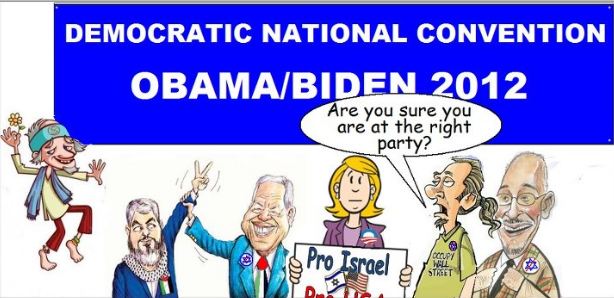
Many political pundits dismiss platforms as tree killers which collect dust. But both the RNC and the DNC has had fun with platforms. What is telling is how Democrats tried CYA on God and Jerusalem and ignored the will of their delegates


READ MORE  at DCBarroco.com